Water Lines
- EPA drinking-water standard
- Tablet-treated lines
- Quality monitoring
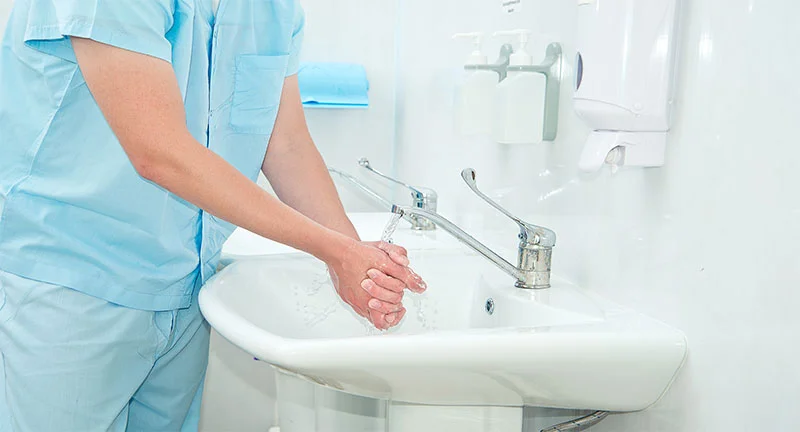
Dental offices should use water that meets Environmental Protection Agency regulatory standards for drinking water. Our office uses a tablet system to treat waterlines for biofilm — a thin, slimy film of bacteria that sticks to moist surfaces, such as those inside dental unit waterlines.
Biofilm occurs in dental unit waterlines because of the long, small-diameter tubing and low flow rates used in dentistry, the frequent periods of stagnation, and the potential for retraction of oral fluids. As a result, high numbers of common water bacteria can be found in untreated dental unit water systems. Monitoring dental unit water quality helps identify problems in performance or adherence with maintenance protocols and provides documentation of compliance.
Handpiece Sterilization
- Heat-sterilized between patients
- KAVO QuattroCare system
Handpieces and other intraoral devices that can be removed from the air and water lines of dental units are cleaned and heat-sterilized between patients, following each manufacturer's instructions for cleaning, lubricating, and sterilizing.
The KAVO QuattroCare is an automatic handpiece maintenance and purging system.
Instrument Sterilization
- Autoclave steam cycle
- Weekly biological-strip testing
Our office follows the standard infection-control procedures based on guidelines from the American Dental Association and the Centers for Disease Control. The autoclave is the instrument responsible for the routine sterilization of our dental instruments.
At the start of the cycle, a pump aspirates the air present in the sterilization chamber. When the boiling temperature is reached, the materials inside the autoclave are left in contact with the steam for the predetermined time period needed to kill off all vegetative forms and living spores. Along with the proper sterilization of instruments and materials, weekly sterilizer monitoring with biological strips is an essential part of our in-office infection-control program.